


If you were forwarded this newsletter, join 8,539 weekly readers—some of the smartest GTM operators & founders—by subscribing here:

Presented by Clay.

Bring AI agents, enrichment, and intent data together and turn insights into relevant, timely action. Start building for free.
& Supported by:

Attention → AI Agents for RevOps
Clarify → The Autonomous CRM
Nooks → Agent Workspace for Intelligent Outbound
Sumble → Buying signals from tech stacks, people data, & active projects
11x.ai → Accelerate growth with a digital GTM workforce

Hey, y’all! 👋
Today’s post is by my friend, the legend, Eric Linssen. He’s a great marketing operator, and now he runs a private community (Demand Collective) of 650+ demand gen leaders from cos like Glean, Cursor, Datadog, and ElevenLabs. (He’s also been instrumental to me as I’ve built The Signal into ‘a real media company’… I can hear him laughing as I type that.)
Demand Collective runs incredible free virtual summits, like the “Demand Day Summit” coming up on June 18th from 10am - 1:30pm PST. 8, no-fluff 20-minute sessions, from operators at companies like Ashby, Superside, and Sentry.
See the agenda & register (it’s free) here.
He has interviewed 75+ demand practitioners about what’s actually working for them. And from those conversations, he’s collected dozens of what he calls “hidden multipliers”. Small, simple tweaks that can get you more growth without more budget. Today, he’s sharing 11 of the most useful ones he’s found.
Let’s get into it (over to Eric).

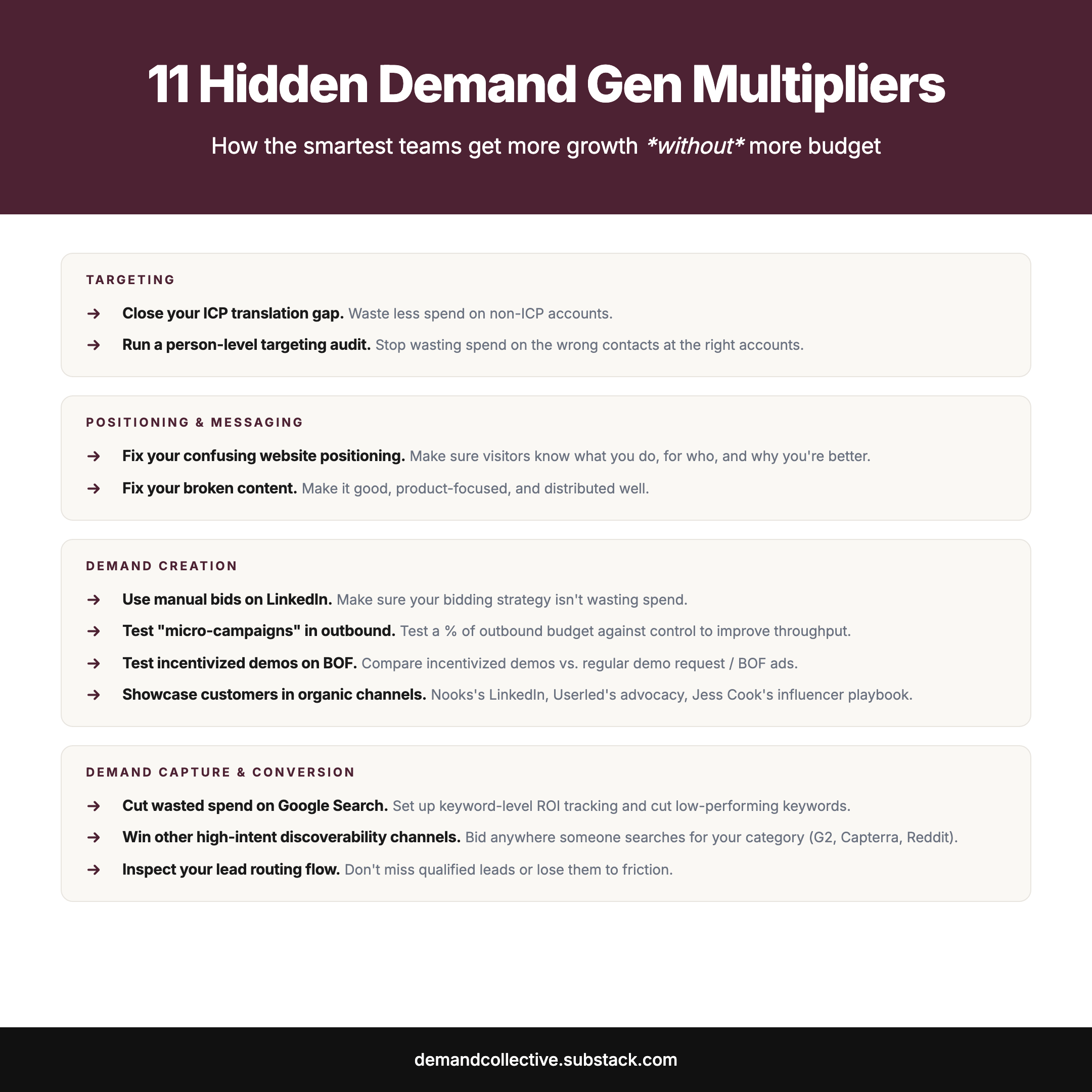
TL;DR: 11 Hidden Demand Gen Multipliers
There are no silver bullets (in demand gen), only lead bullets.
Our marketing’s impact has a ceiling dictated by forces outside of our control (PMF, market trends), but these hidden multipliers are lead bullets we can put to work to get as close to that ceiling as possible.
I’m calling these “hidden multipliers” because they don’t take extra budget. They’ll help you multiply your impact, without spending any extra budget on growth.
1/ ICP: Closing the ICP translation gap so you waste less spend on non-ICP accounts.
Problem: You might be wasting spend on non-ICP accounts. Because you’re either using native platform targeting, or account lists built w. firmographic filtering.
Root Cause: These tools are blunt. They think Bumble and Cursor are both “software development companies”.
Solution: Use a tool like Clay to score your target accounts with much more granularity, so you can massively decrease wasted spend on non-ICP accounts.
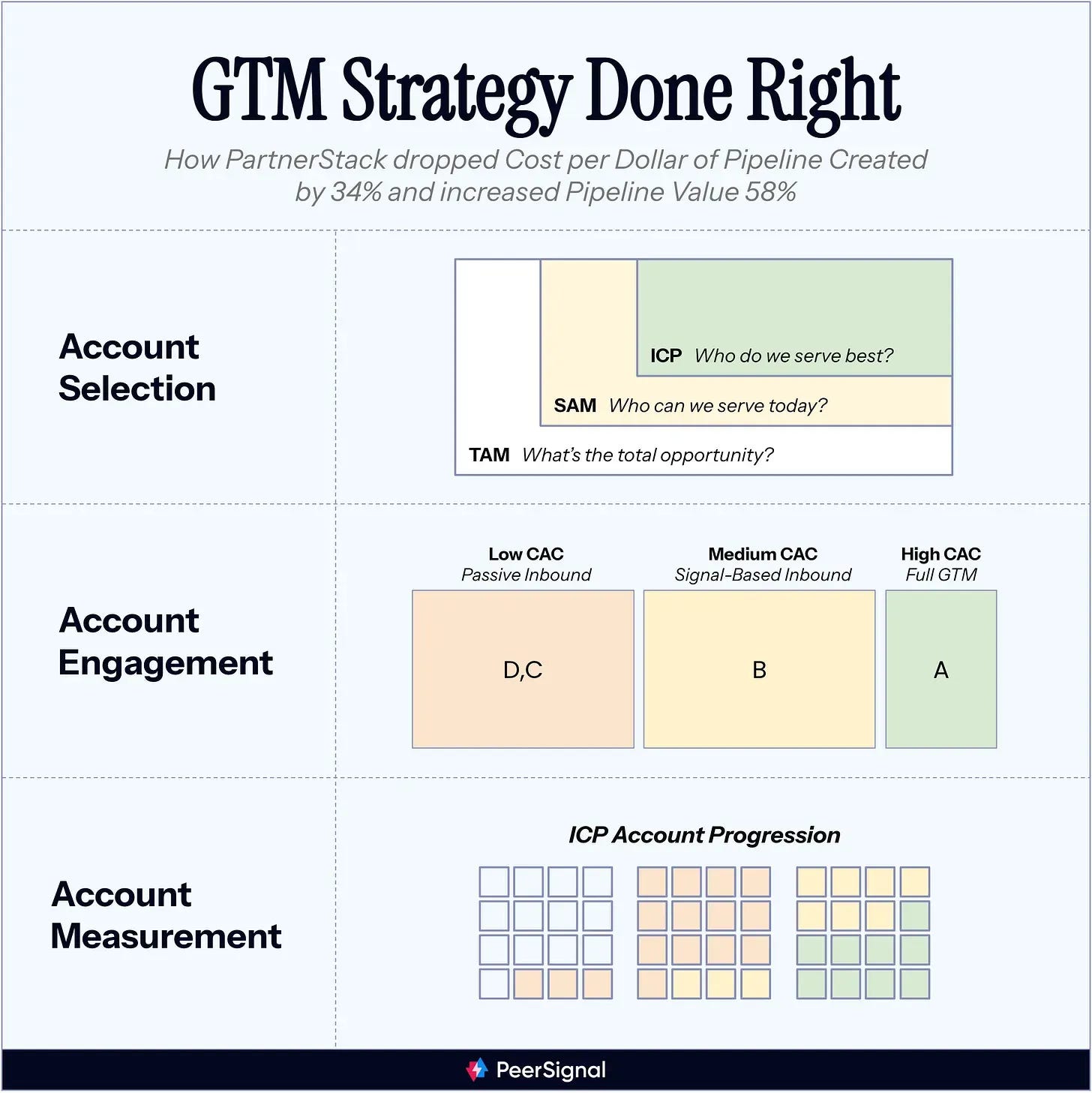
Example/Go Deeper: How Tyler Calder, CMO @ PartnerStack increased ACV 58%+, while decreasing cost per dollar of pipe by 35% by “closing the ICP translation gap”.
2/ Person-level targeting audit
Problem: Even if you have the right accounts, if you’re using job title filters in LinkedIn, you might be wasting spend on the wrong people.
Root Cause: LinkedIn job title filtering sucks. Meta’s is even worse (it has none lol).
Solution: First, you can pull a demographic report to see if you’re wasting spend on the wrong titles. If so, you can use a tool like Vector to target by specific people, across every channel.
Example/Go Deeper: How Airbyte improved pipe:spend from 1.5:1 to 4:1 by fixing their targeting.
3/ Fix your confusing website positioning.
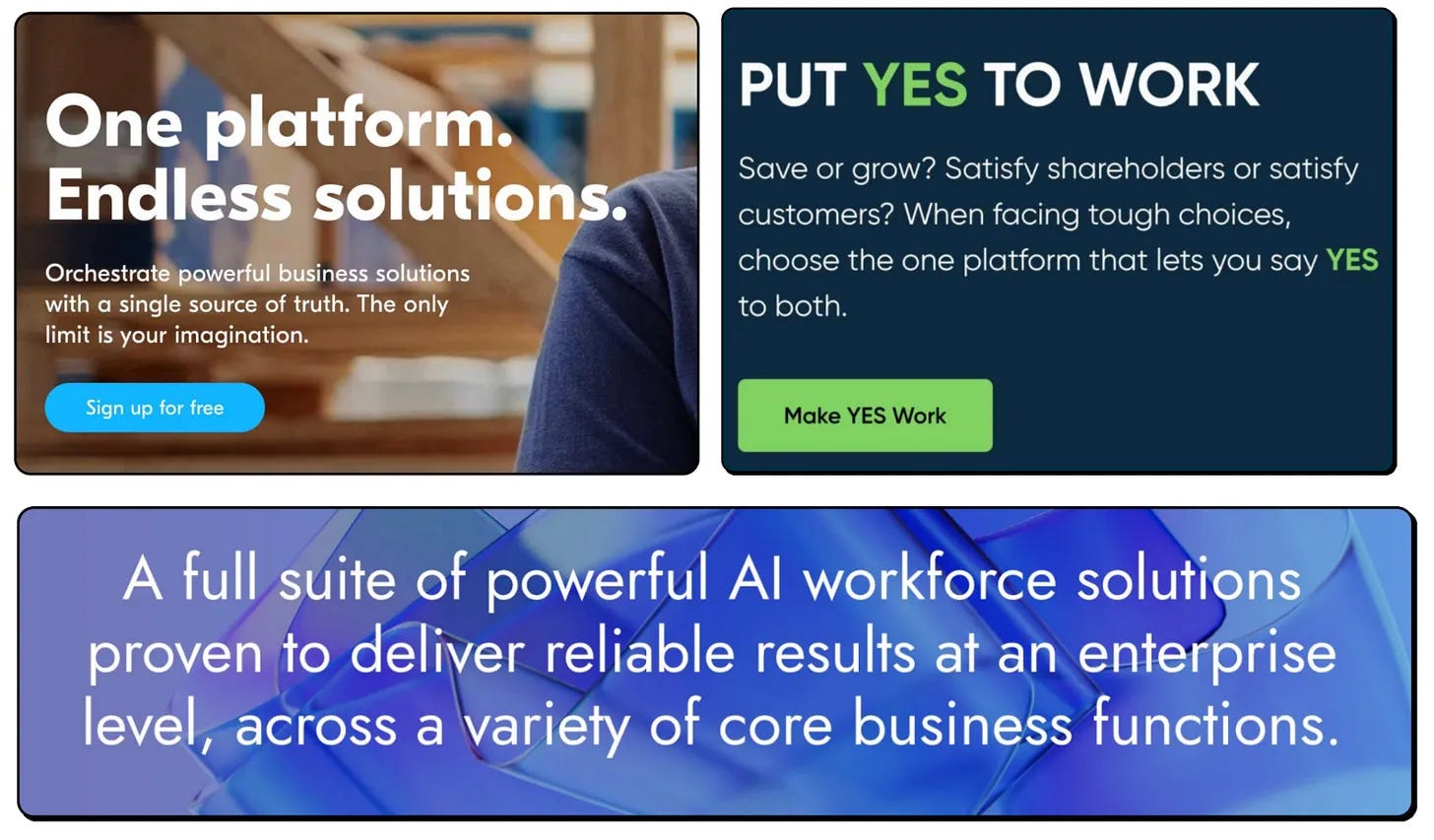
Problem: You could be spending money getting qualified prospects to your website, but they leave having no idea what you do. Make sure everyone coming to your website knows *exactly* what you do, for who, and why you’re better than alternatives.
Root Cause: Who knows, but this is true for 80%+ of b2b companies.
Solution: Follow Fletch PMM’s positioning playbook.
4/ Fix your broken content.
Problem: If your content (ads, blogs, resources, webinars) isn’t converting, you’re wasting ad spend & energy distributing it.
Root Cause: It’s probably one of the root causes above👆.
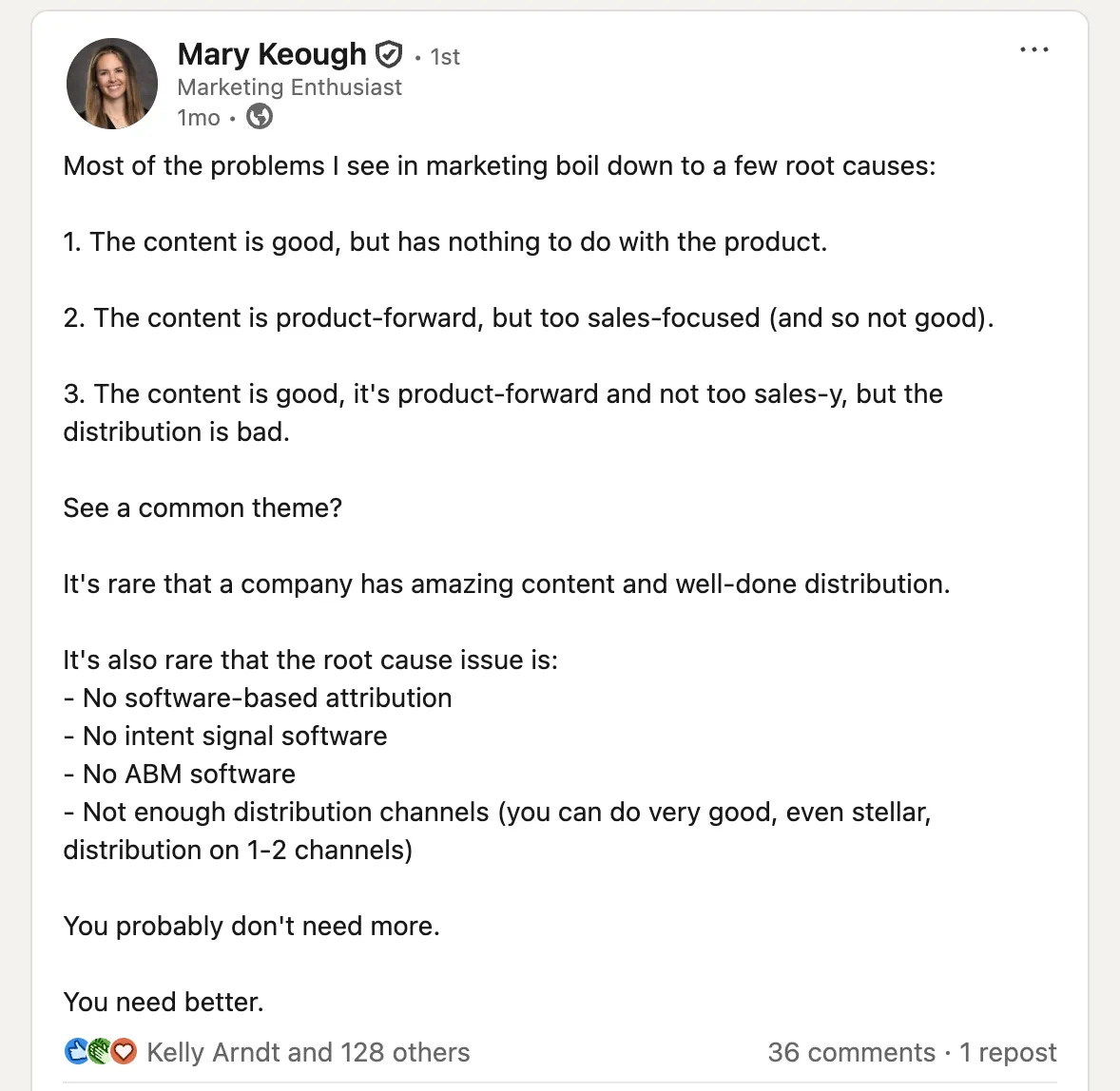
Solution: Make sure your content “is good, product-focused, and distributed well”.
Example/Go Deeper: Mary Keough’s framework (w. examples).
5/ Manual bids on LinkedIn
Problem: If you’re not running manual bidding on LinkedIn, you’re probably wasting spend and overpaying for impressions, so your spend won’t go as far & CPA will go up.
Root Cause: LinkedIn’s maximum delivery (or manual bids that are too high) will over-bid because LINKEDIN LOVES YOUR MONEY!
Solution: Either start w. Lower-than-recommended manual bids and inch up until you get delivery, or use an automated tool like Vector’s bid agent.
6/ Test “micro-campaigns” in your outbound
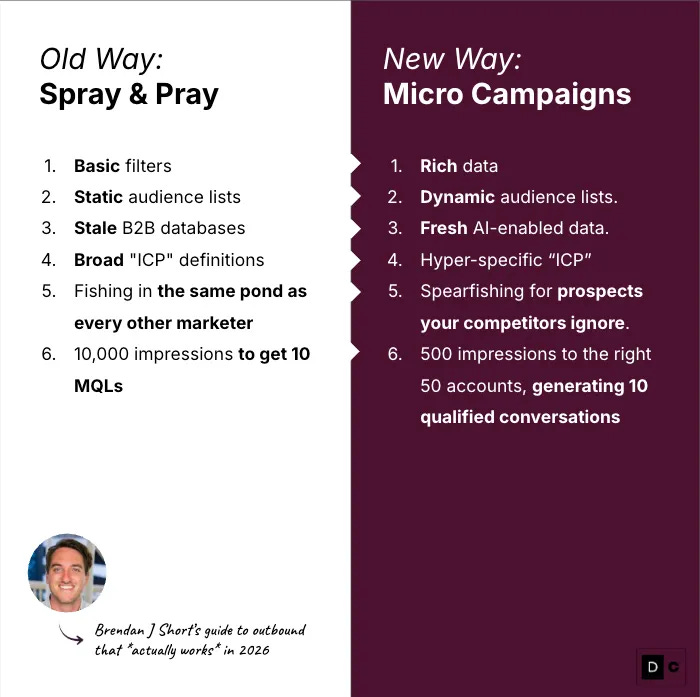
The ‘playbook’ Brendan calls “Micro-campaigns” (well… this is meta…):
Timing is more important than anything else in outbound. A ‘mid’ message to the right person at the right time beats a perfectly crafted message to someone with no need.
The smartest outbound teams are using AI to find these people (tiny lists of people with a strong reason they’re likely to take a meeting NOW).
They send them hyper-personalized messages with a no-brainer offer.
And they repeat every week to new, hyper-targeted lists as new prospects move “in-market”.
It’s worth testing micro-campaigns with a small % of outbound budget against control and see if you can improve total throughput.
It’ll probably work. The volume is low, so you won’t need to hire anyone new, just reallocate a small % of the rep time already doing outbound.
7/ Test incentivized demos on BOF campaigns
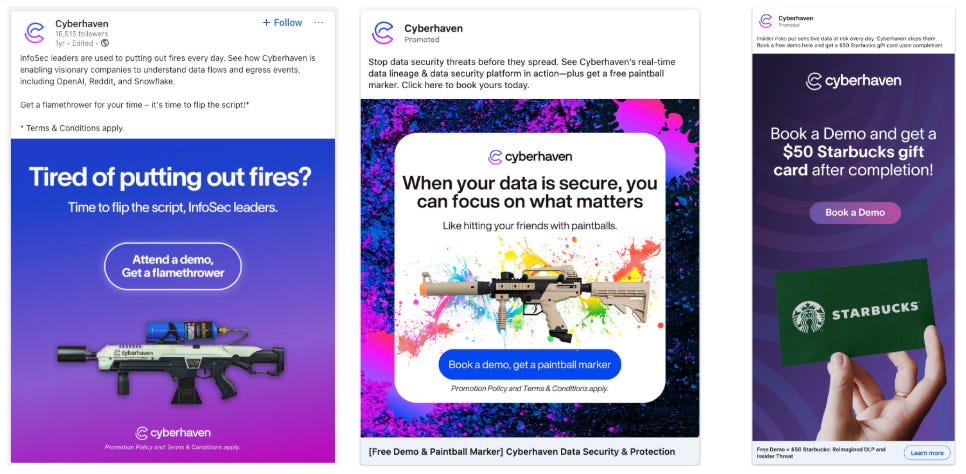
Incentivized demos get a lot of flak, but for lots of Demand Collective members I talk to… they work. Not cold for most companies, but if tested against existing BOF “Get a Demo” ads, they out-perform them (must make sure targeting is dialed in).
So it’s worth running a small test comparing incentivized demos vs. regular demo request/BOF ads.
8/ Showcase customers in organic channels
This one takes the most resources out of the 11, but it’s worth calling out. If you’re already spending money on organic, highlighting existing customers is probably the highest-leverage way you can improve the channel. You may be able to learn from what worked for Nooks, Userled, or Jess Cook:
9/ Cut wasted spend on Google Search
Setting up keyword-level ROI tracking takes half an hour. Once you have it you can see which specific deals came from which keywords. And also, which keywords you’re spending on that aren’t driving any downfunnel results (so you can cut them).
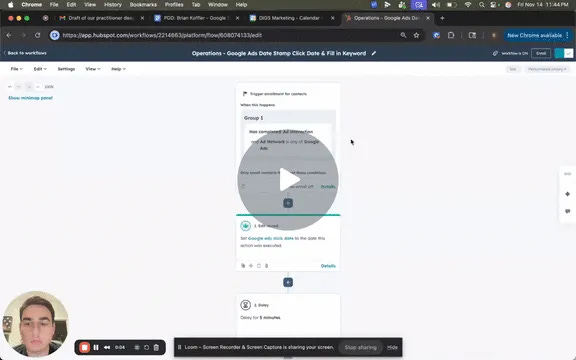
Full breakdown here.
10/ Win other high-intent discoverability channels
Chris Shuptrine, VP Mktg at Torii, scaled Ent leads 90%+ QoQ through what he calls “High Intent Discoverability”. He:
Chooses a “phrase” he wants his buyers to associate him with (for Torii, “SaaS Management for IT, Finance, and Security”)
Bids/focuses on organic *everywhere* a target prospect would search for that phrase. Google, Bing, Reddit, Capterra, G2, Quora.
All so Torii “is seen 5+ places within 5 minutes of research.
Even if it’s $5/day, those high-intent discoverability channels are the highest ROI money you’ll spend if you have any sort of mature category, because you’re only bidding on the highest-intent searches.
Hope you found these valuable!

Thanks again to Eric for this guest post! He’s a legend, a terrific operator, an appreciator of both AI—and human craft, and he runs the world’s best community for Demand Gen practitioners. Here are three ways to go deeper with Eric/Demand Collective:
Subscribe to his newsletter: The Demand Collective Newsletter.
Apply to join The Demand Collective community (it’s free, but you have to be spending $30K+/mo on ads).
Register here to attend Demand Day Summit (June 18th).
Thank you for your attention and trust. I do not take it for granted.
See you next time,
Brendan 🫡
PS: Still want more? Best of The Signal